
Choosing the right grinding machine is an important decision for any manufacturing or food processing business. Whether you are processing spices, grains, chemicals, or agricultural materials, the right equipment can significantly impact productivity, product consistency, and operating costs.
At GurKirpa Industries, we understand that every business has different processing requirements. Selecting equipment that matches your production needs is essential for achieving long-term efficiency and reliable performance.
1. Understand Your Material Requirements
The first step is identifying the type of material you need to process. Different materials require different grinding mechanisms.
For example, spices may require fine and uniform grinding, while grains and agricultural materials may need equipment capable of handling larger quantities.
Important factors include material hardness, moisture content, particle size, and the desired finished product.
2. Determine Your Production Capacity
Production capacity plays a major role in selecting the right grinding machine.
Small-scale operations may benefit from compact machines, while larger manufacturing facilities generally require high-capacity industrial equipment.
Consider your daily production targets, operating hours, and future expansion plans before making a decision.
3. Choose the Right Grinding Technology
Several types of grinding equipment are available, including:
- Impact Pulverizers: Suitable for various dry materials requiring fine grinding.
- Hammer Mills: Commonly used for size reduction of grains, feed ingredients, and other suitable materials.
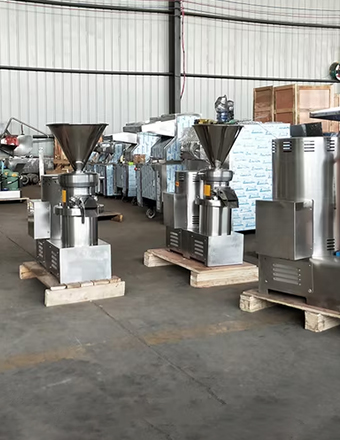
- Spice Grinding Machines: Designed for processing spices into powders of the required consistency.
- Industrial Grinders: Used for a variety of commercial and manufacturing applications.
The appropriate technology depends on your material properties and desired output.
4. Evaluate Machine Quality and Durability
Industrial grinding machines often operate for extended periods. Selecting equipment with robust construction and suitable components helps reduce unexpected downtime.
Look for durable materials, accessible maintenance points, appropriate safety features, and reliable manufacturing quality.
5. Consider Maintenance and After-Sales Support
Routine maintenance is essential for keeping industrial equipment operating efficiently.
Before purchasing, ask about spare parts availability, maintenance requirements, technical assistance, and installation support.
Conclusion
Choosing the right grinding machine requires careful consideration of material type, production capacity, output requirements, and long-term operating costs.
GurKirpa Industries offers industrial grinding solutions for different processing applications. Our team can help you explore equipment options based on your specific business requirements.
Looking for the right grinding machine? Contact GurKirpa Industries to discuss your production requirements.